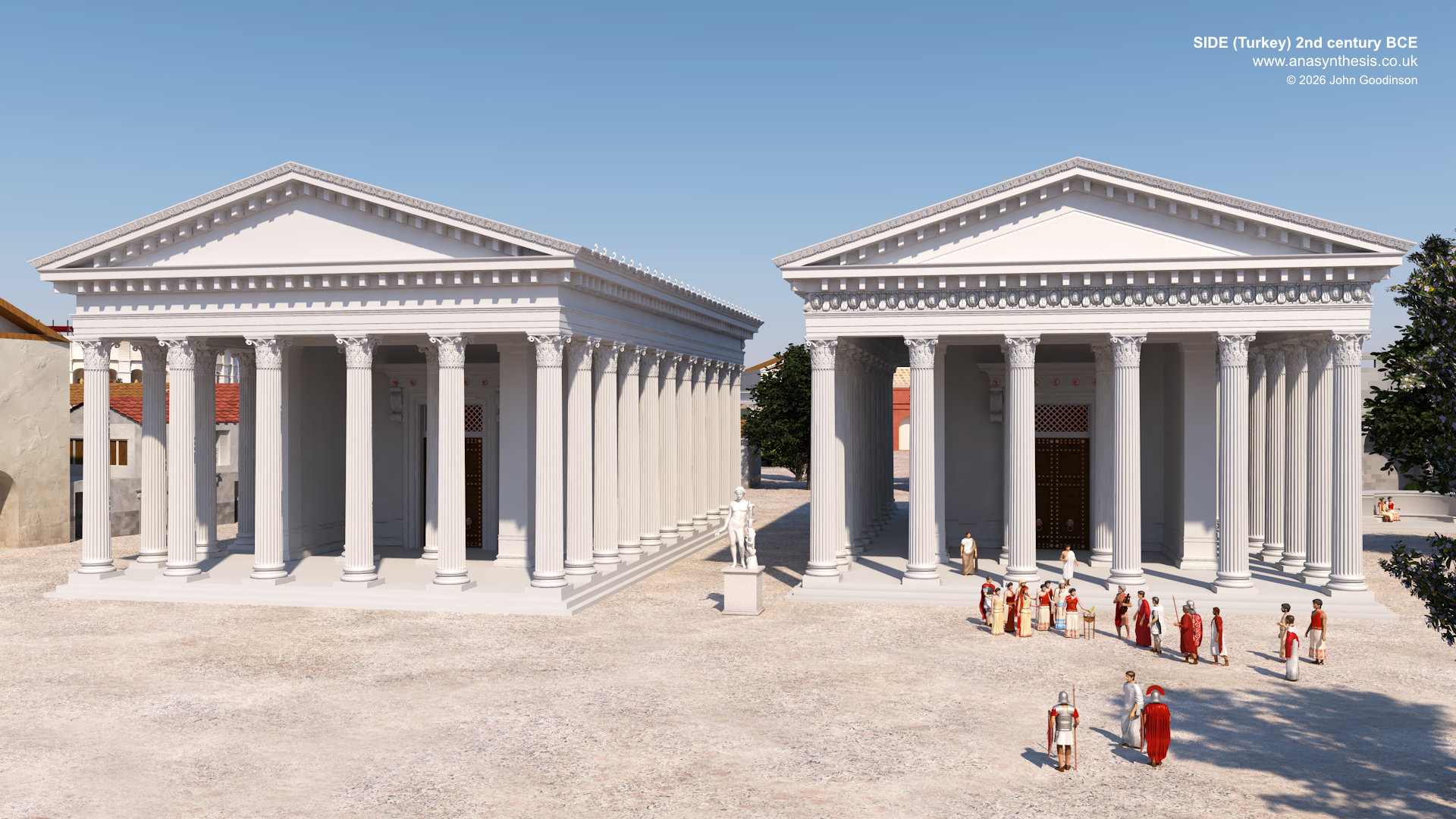
Our 'sketching' series continues with 'Side' (in modern day Turkey) Temple of Apollo, Tyche and Athena.
Beginning as a Greek colony, the city of Side became a prosperous port in Hellenistic and Roman times. Our current reconstruction of the city features the temple of Apollo, the Greco-Roman god of the sun who represented musical harmony, enlightenment and the arts. Alexander the Great occupied Side in 333 BCE, leaving a single garrison behind, thus ensuring the continuing influence of Hellenistic culture.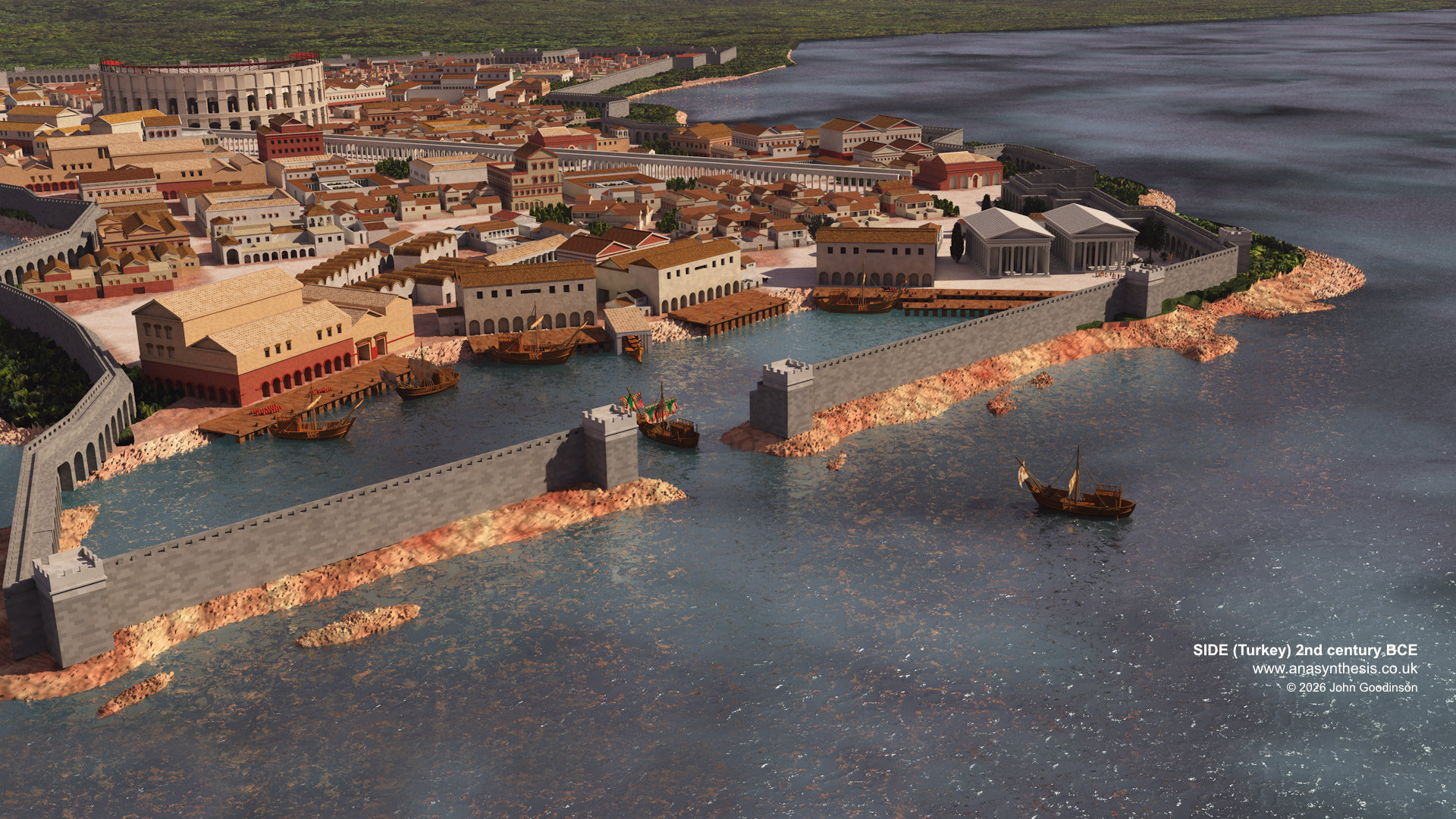
In 25 BCE the Roman emperor Augustus reformed Side’s administration, initially making it part of the new Roman province of Galatia. Gradually Apollo's significance overshadowed that of Athena (Roman Minerva). The city flourished under Roman rule, with extensive reworking of momunents and the addition of a showy marble colonnaded street measuring around 200 meters long and 20 meters wide leading from the theatre to the sea.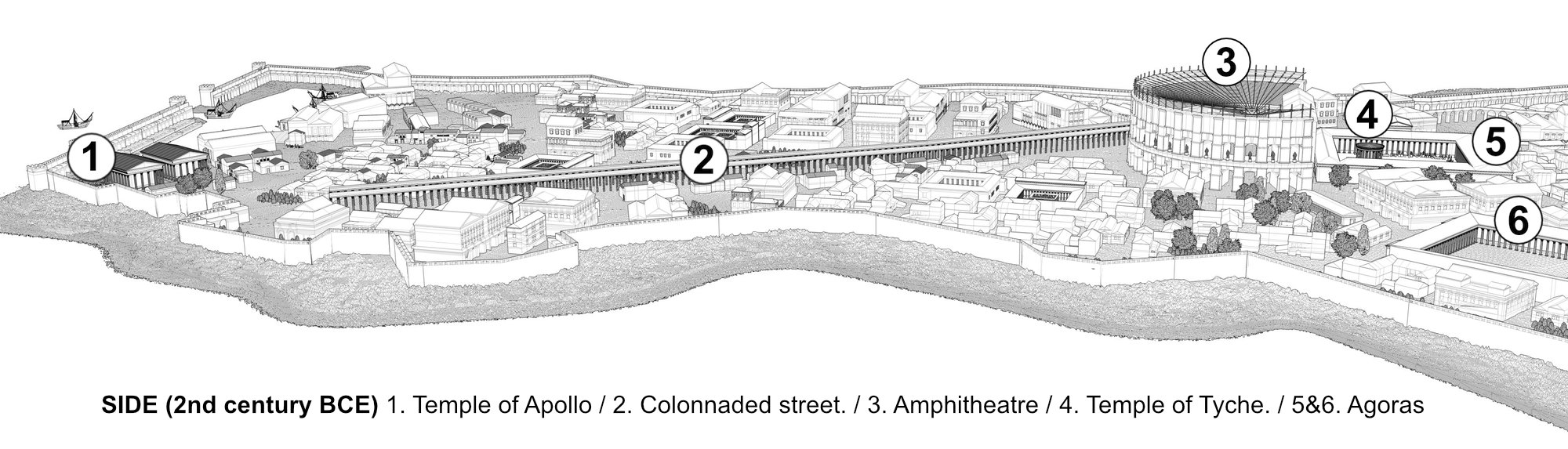
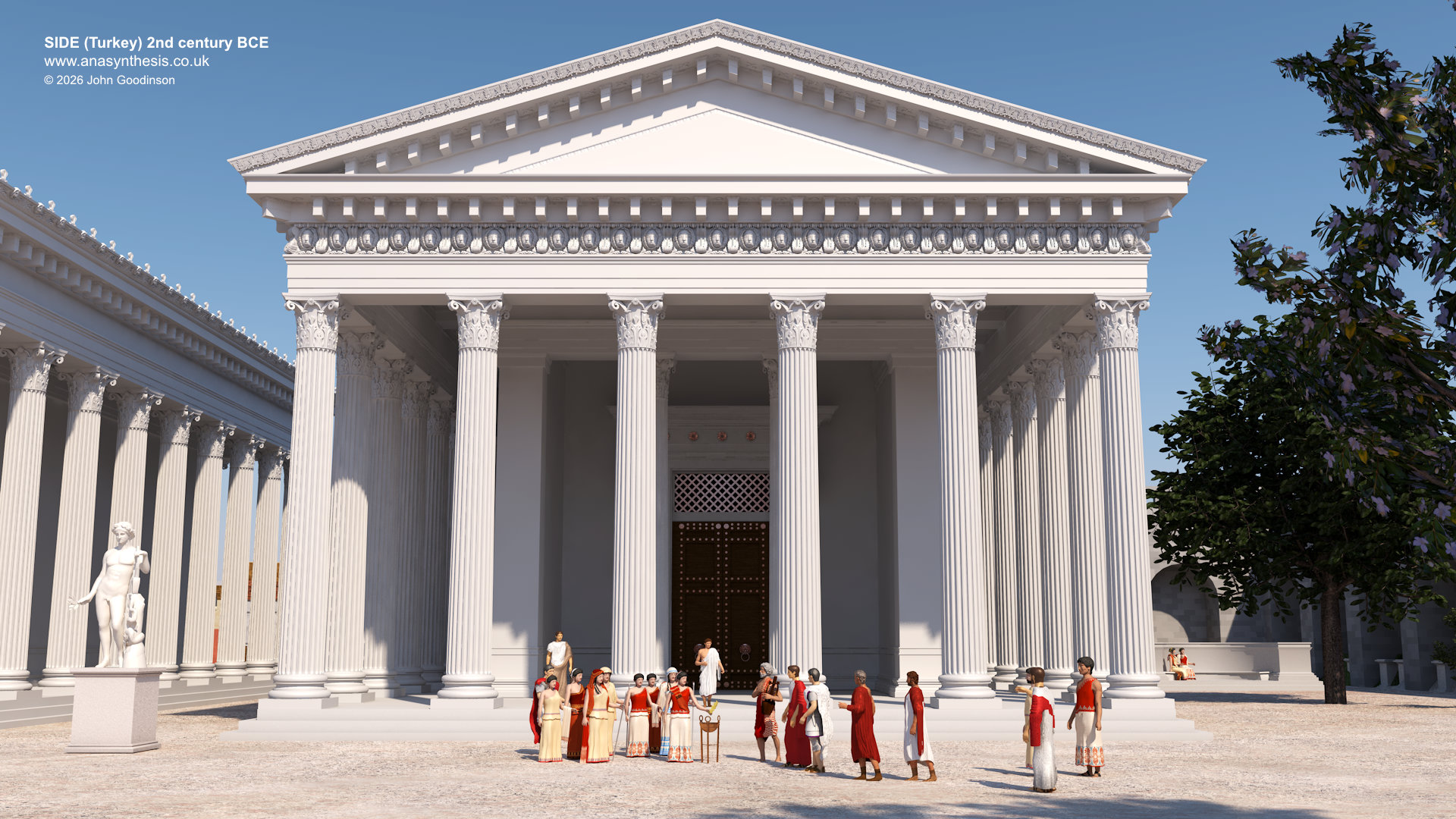
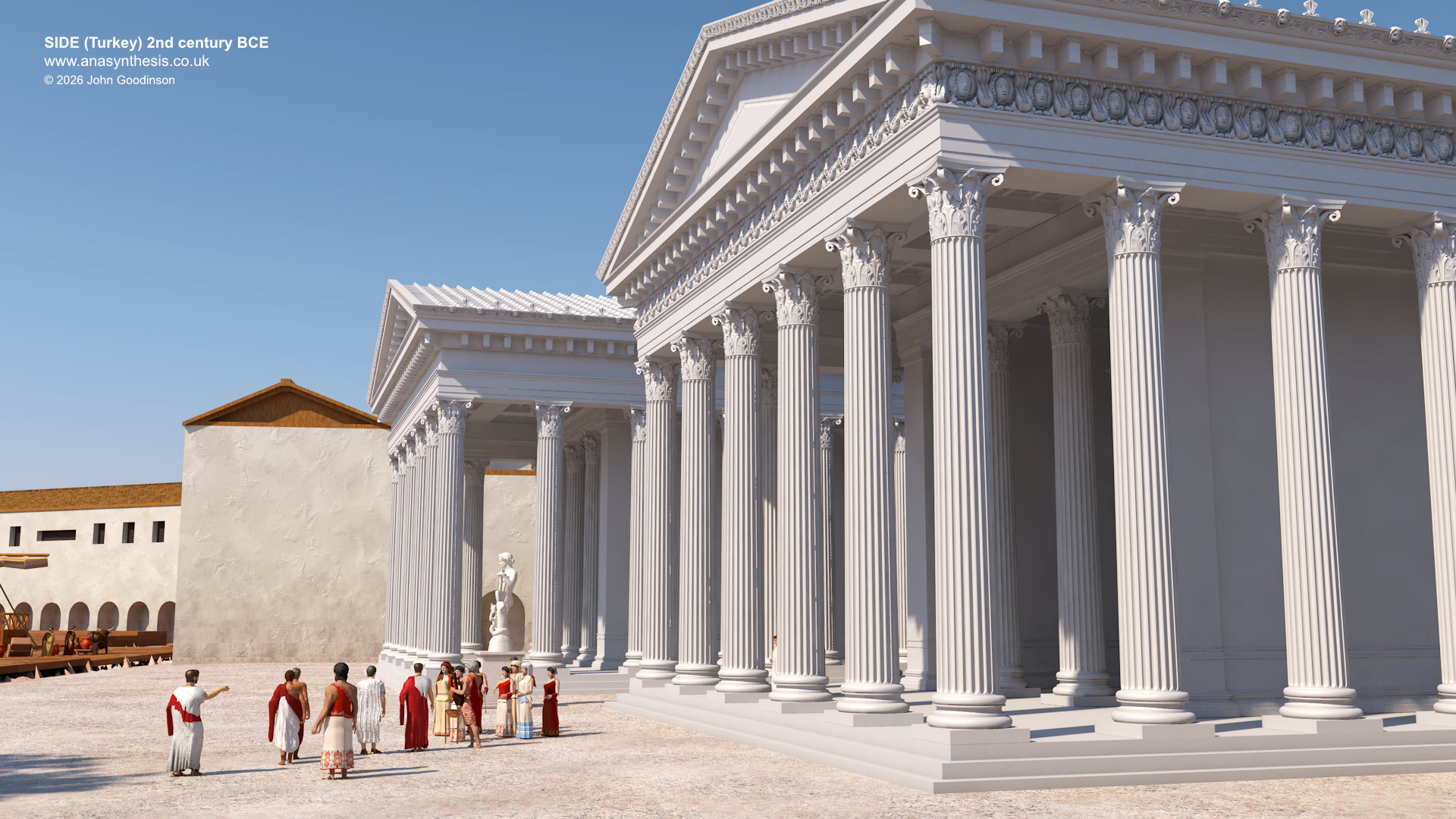
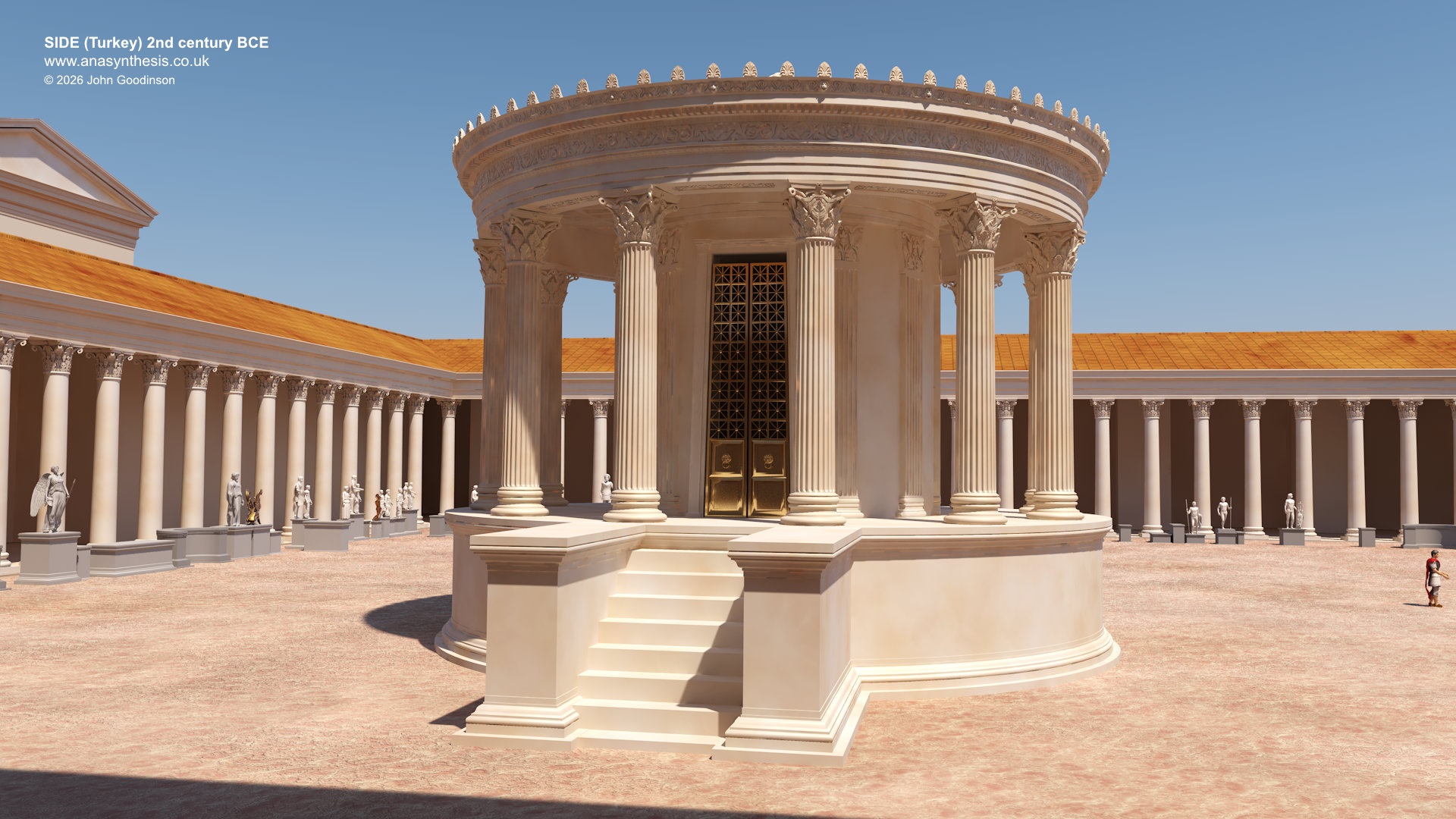
Apollo’s temple (shown above) by the shore was extensively rebuilt in the second century CE with Corinthian columns supporting an eye-catching frieze with Medusa (Gorgon) heads. By the second century CE Side was a prosperous trade center as attested by the colossal theatre seating 15,000–20,000 people. The adjacent agora contained a circular temple dedicated to Tyche, goddess of fortune, a deity popular with merchants (reconstructed below within the agora).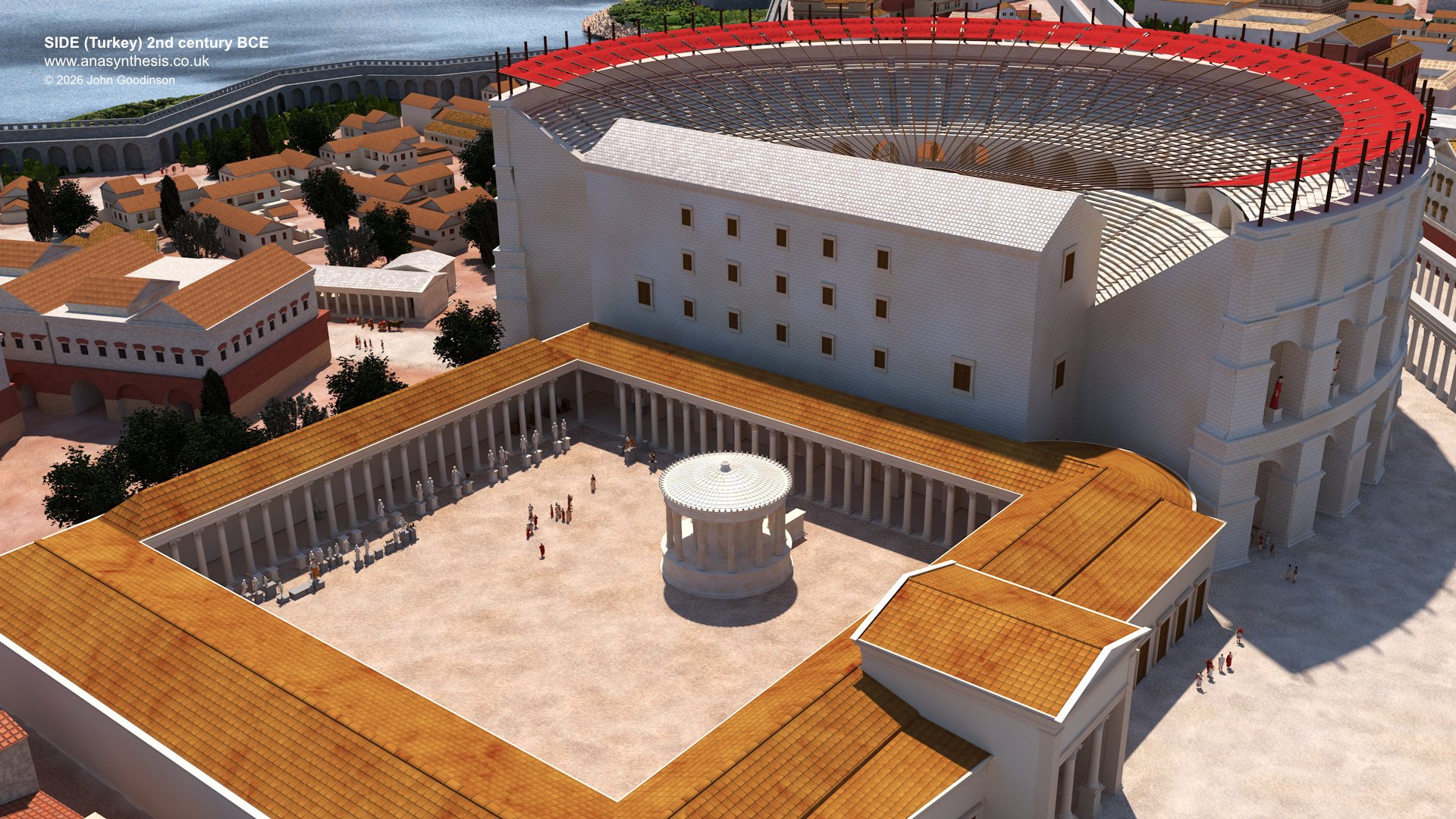
The Corinthian temples of Athena (left/north) and Apollo (right/south) stood side by side facing the sea; both were aggrandized in the second century BCE. That of Athena (Greek goddess of wisdom) had a stylobate of 18 x 35 meters; that to Apollo measuring 16 x 30 meters.
Below: the temple of Athena (left) and Apollo (right).